· LLM Inference
LLM Inference Metrics, Explained Simply
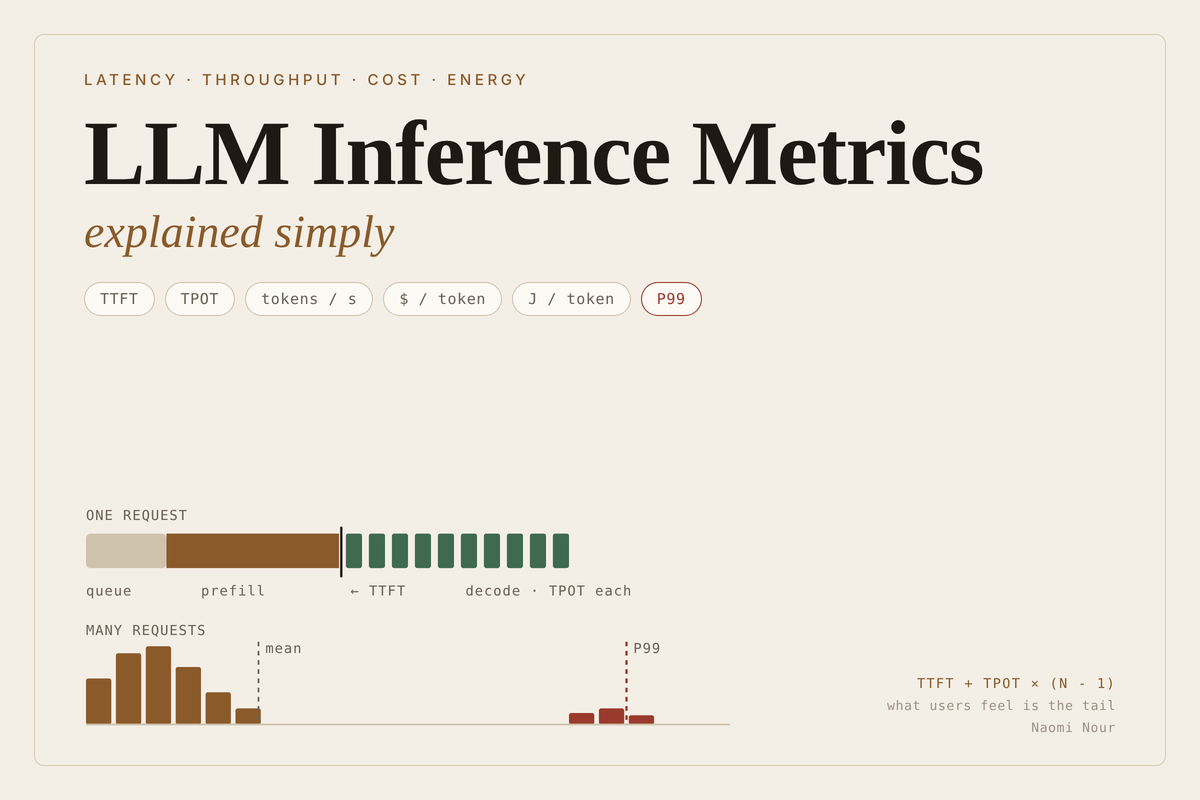
A plain guide to LLM inference metrics: TTFT, TPOT, throughput, cost and energy per token, and P99 latency, with demos that show why the average misleads.

A plain guide to LLM inference metrics: TTFT, TPOT, throughput, cost and energy per token, and P99 latency, with demos that show why the average misleads.
A plain explanation of the Transformer paper: what queries, keys and values do to a sentence, why word order has to be added back, and why the design won.
Git versions files, but a coding agent accumulates processes, packages, sandbox state and a warm cache that a checkout can't restore. Shepherd makes every agent step a reversible commit, so a supervisor can catch bad changes before they land.
Cutting tool-output tokens can raise your AI agent bill instead of lowering it. Why prompt caching means token reduction isn't cost reduction, and what to measure instead.
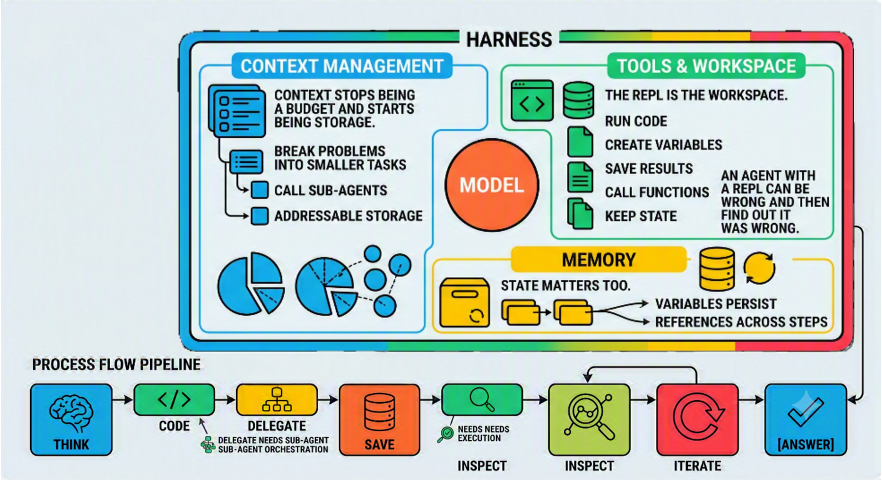
Harness engineering is where AI agent capability actually lives. Context management, tools, memory and a real workspace decide how much of a model's intelligence you get, explained through four interactive demos.
How an OpenAI system resolved or advanced ten long-standing problems in mathematics and theoretical computer science, with every argument formalised into a machine-checked Lean proof, explained through ten interactive demos.